
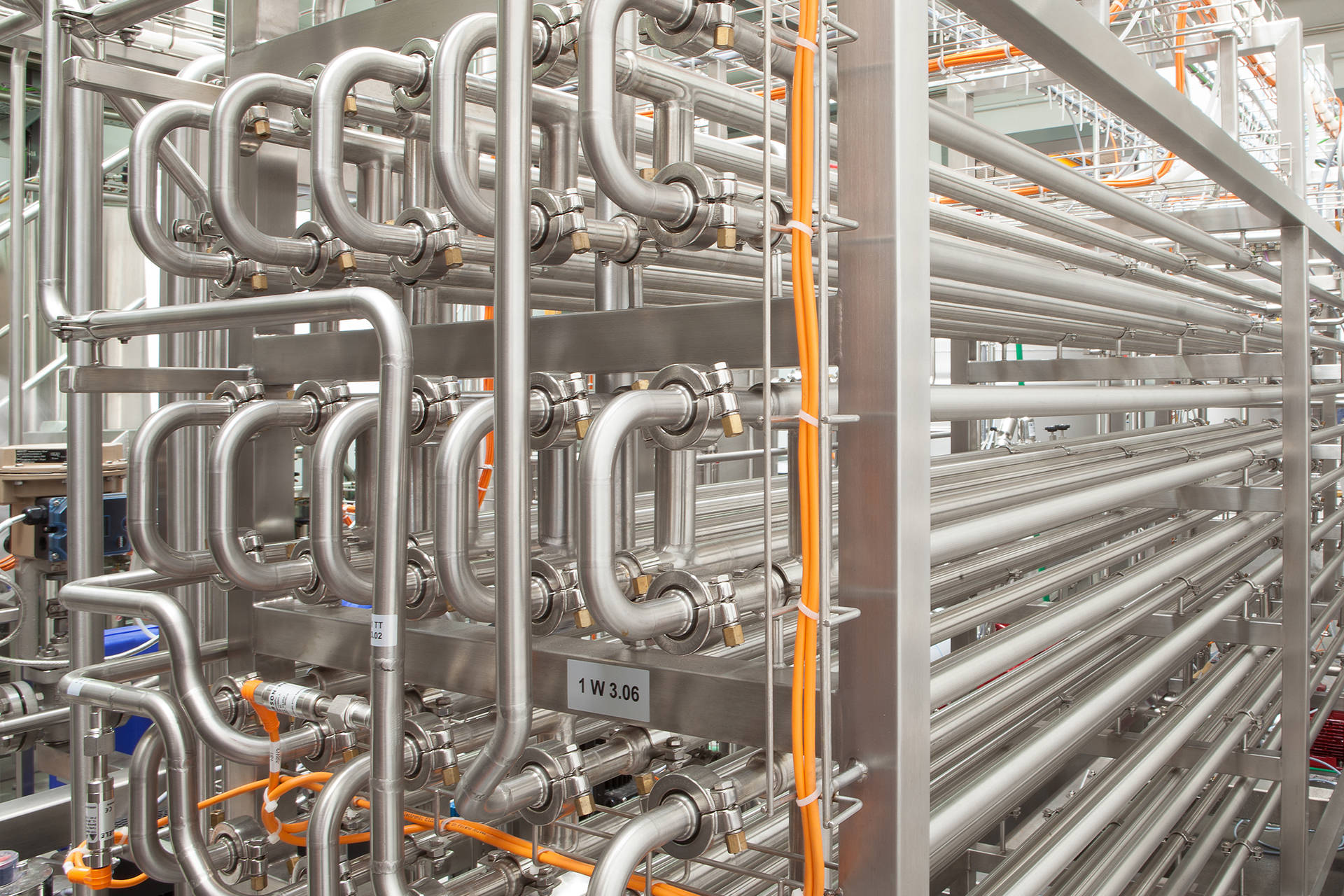
Heating and cooling of liquid foods
A tried-and-tested method for heating products
The pasteurisation of food for preservation has been used for hundreds of years. The process is named after the researcher Louis Pasteur, who, as part of his research into fermentation, described the effect of reducing bacteria through heating and, consequently, the extended shelf life of food. Pasteurisation remains an important thermal process for gentle heating in the food and beverage industry. Liquid and paste-like products are heated briefly to between 72 °C and 100 °C. The microbiological killing effect depends on the temperature, the holding time, the product properties (for example initial bacterial count, pH value, water activity, nutrients) and the storage conditions.
Demanding sterilisation
Efficient thermal treatment for maximum product safety
For the safe sterilisaion, products with higher microbiological requirements need pressure systems capable of heating to over 100°C. The complete destruction of all microorganisms can be achieved at temperatures of 121°C or higher, provided the product is held at that temperature for a sufficient duration. However, holding time at high temperatures has a negative impact on product properties such as taste and colour. A higher temperature kills microorganisms more reliably than a longer holding time, whereas a longer hoding time has a more negative effect on product quality. This led to the development of UHT (Ultra High Temperature) processes. In these UHT processes, the product is treated at temperatures above 135°C for short holding times.
The Ruland team works with the customer to select the right heating process to ensure microbiological safety, extended shelf life and consistent quality of their product. The aim is to preserve the natural product structure as much as possible whilst ensuring adequate product safety. The plant technology can also influence other factors, such as the energy consumption for heating and cooling, as well as mechanical stress on the product. Ruland heating systems are ideally suited for the gentle heat treatment of many liquid and semi-liquid products, including the following products:
Juices & nectars | Mixed drinks | Tea and coffee drinks | Beer and brewery products | Milk and milk-based drinks | Plant-based drinks (oats, soya, almonds, peas) | Fruit preparations, concentrates and purées | Smoothies and functional drinks | Sauces, dressings, ketchup, mayonnaise | Liquid egg products | Whey and whey derivatives
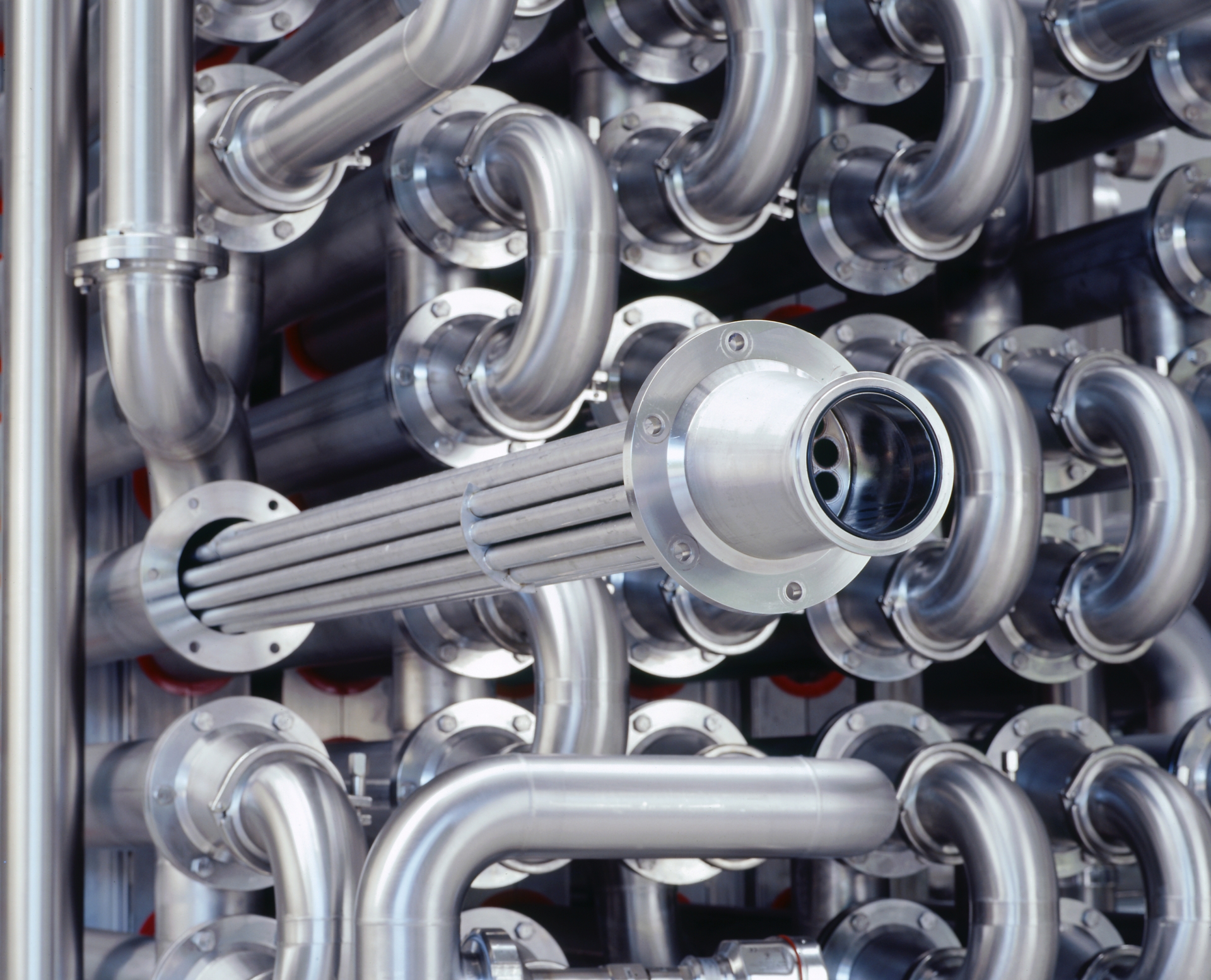
Process reliability through modern pasteurisation technology
Tailored to the specific product and its thermal sensitivity
Ruland engineers develop customised pasteurisation concepts that are precisely tailored to the specific product and its temperature stability. Depending on viscosity, particle size, fibre content and protein structure, we select the appropriate heat transfer technology, as for example:
- Plate heat exchangers – ideal for low-viscosity products without particles
- Tube heat exchangers – for high-viscosity or particulate-containing applications
- Scraped Surface Heat Exchangers (SSHE) – for particularly demanding or highly viscous media
- Direct steam systems – also suitable for viscous media
The required level of inactivation of microorganisms is achieved through precise temperature control and optimised holding times. At the same time, the impact on taste, colour and nutrients is kept to a minimum.
Safe heating processes and reliable cleaning
Flexible yet always traceable
Our systems are designed in close cooperation with the customer and are used in both continuous production processes and batch-based applications. Using state-of-the-art control technology, we ensure stable process temperatures and maximum system efficiency. Thanks to heat recovery, our heating systems also operate in an environmentally and economically efficient manner. Hygienic design (CIP/SIP-compatible) ensures easy cleaning of the systems and meets the high standards of the food industry. Our automation solutions ensure safe operation across all batches and enable comprehensive documentation and traceability of production processes. This ensures maximum process reliability and supports companies in complying with all quality and food safety standards.
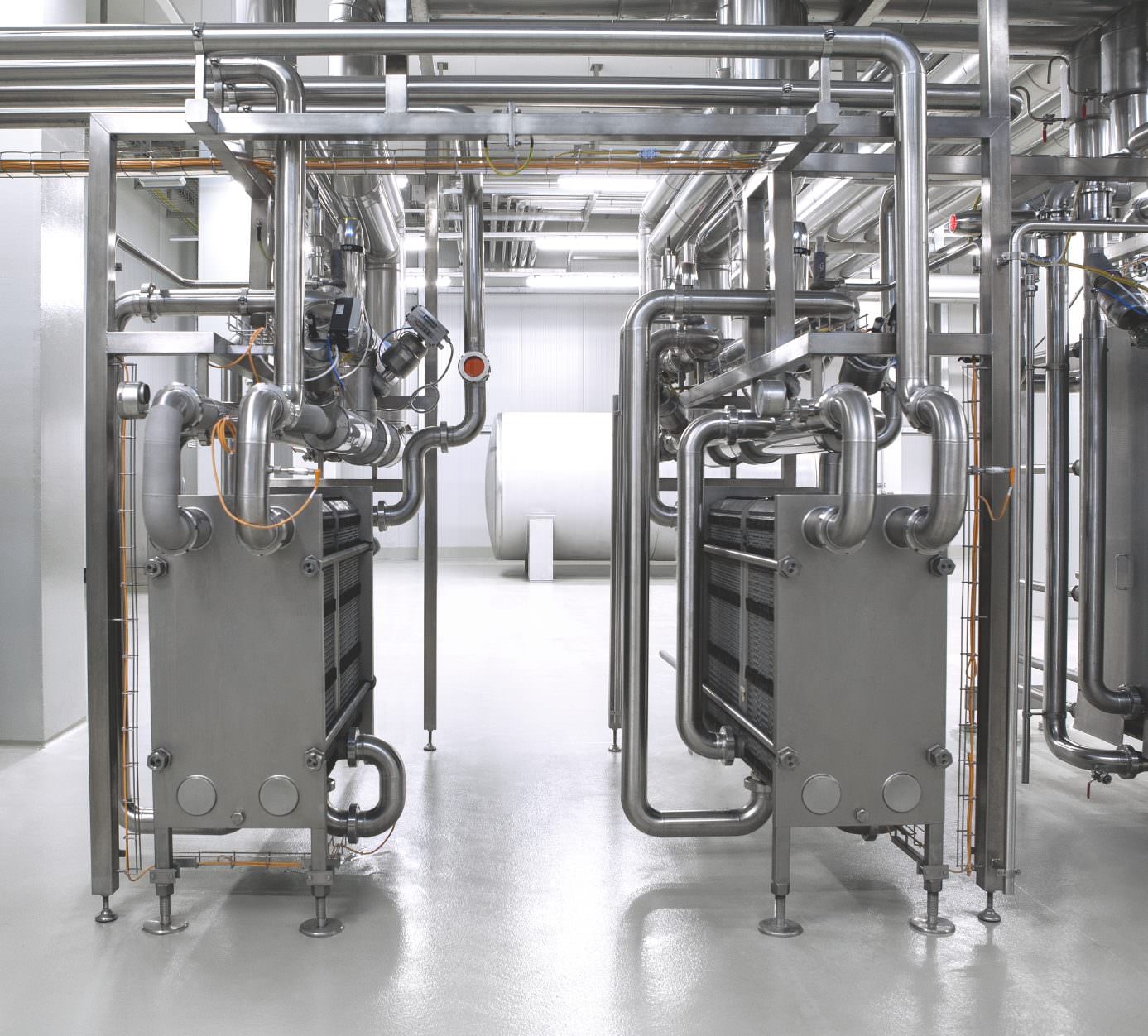
Heating and cooling
Tailored to your requirements
Ruland heating systems can be easily integrated into existing production processes or adapted to new product requirements. Whether for new projects or scaling up pilot plants to industrial production, our engineering teams support the entire process – from design and automation planning through to commissioning and training. Tailored to the specific needs and requirements of our customers, we design a range of systems for heating and cooling:
Flash and UHT (Ultra High Temperature) systems | Plate heat exchangers | Tube heat exchangers | Scraped surface heat exchangers | Steam infusion | Direct steam injection | Ultra-pure water systems | Ultra-pure steam systems | Cooling systems | Inactivation systems
You need to heat or cool your products?
We would be delighted to advise you personally.
Let’s talk about your project, requirements and ideas.